
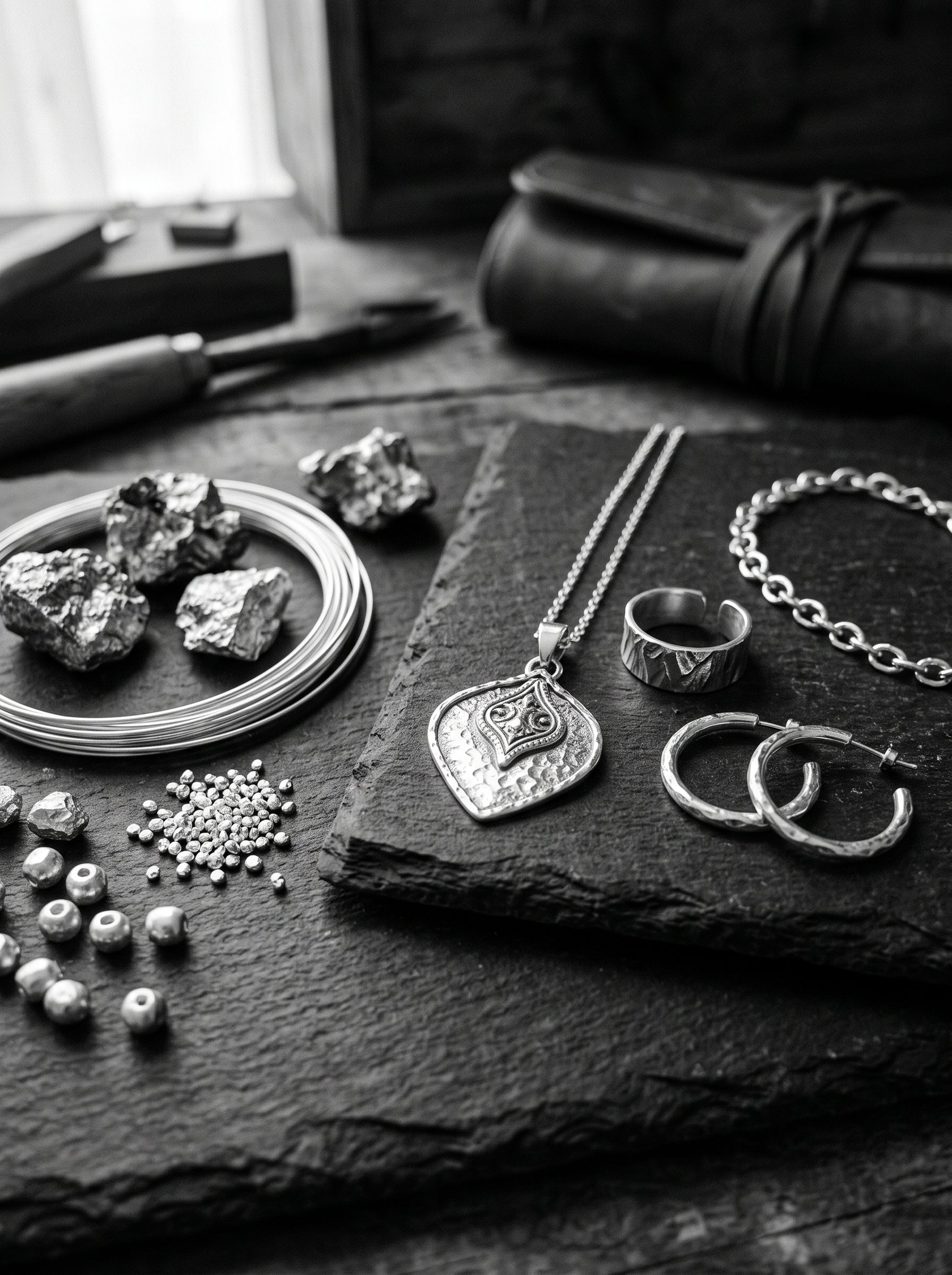
Wholesale Silver Jewelry Pricing Worksheet: What Retail Buyers Should Calculate
A wholesale silver jewelry price is only useful when the buyer understands what it includes. Retail brands should separate the product quote from sampling, mold work, packaging, shipping, duties, payment costs and the margin required to operate the collection. A worksheet makes the first order easier to evaluate and the next order easier to compare.
Record the product quote by SKU
List each design, material, finish, size, color and quantity. Do not combine several variations into one total if the production requirements differ. A per-design view helps the buyer identify a statement item, a core item and an add-on component that may have different commercial roles.
Add sampling and mold assumptions
Keep sample fees and mold fees separate from mass-production unit cost. 925 Pro assesses these charges according to the actual size, shape and weight of the design. If a revision becomes a major change, record the possible additional assessment instead of assuming every change is included.
Include packaging and private label work
Add jewelry cards, pouches, boxes, inserts, logo engraving, labels, barcodes and any artwork preparation. Confirm whether packaging is supplied by the buyer or coordinated through the manufacturing project. Packaging can affect both landed cost and the launch schedule.
Calculate landed cost carefully
Shipping method, destination, insurance, customs duties, taxes, brokerage and local delivery can sit outside the factory quote. 925 Pro can discuss small-parcel line and express shipping to serviceable non-war destinations, but the final cost and tax treatment depend on the route and destination.
Model retail price and reorder risk
Build a retail scenario using the customer price, payment fees, marketing allowance, returns allowance and desired margin. Then model a reorder using the approved SKU, finish, size split and packaging specification. The first order may include one-time sampling or mold costs that should not be treated as recurring unit cost.
Use MOQ as a cash-flow input
925 Pro has confirmed MOQ from 30 pieces per design. The worksheet should still show quantity by design, color and size so the buyer can see how much inventory is committed. A lower per-design MOQ is helpful, but it does not eliminate storage and packaging decisions.
FAQ
Does a wholesale quote equal landed cost?
Not always. Confirm shipping, duty, tax, brokerage, packaging and payment assumptions separately.
Should sample fees be spread across the collection?
That is a business decision. Track them separately first, then decide how your internal pricing model allocates one-time development cost.
Can 925 Pro help clarify quote assumptions?
Yes. Send the design, quantity, finish, packaging and destination through the quote process.
How to use this guide for a real buying decision
This guide is about Wholesale Silver Jewelry Pricing Worksheet: What Retail Buyers Should Calculate, but the practical question for a buyer is broader: how can a jewelry idea become a repeatable product that is suitable for a brand, retailer or wholesale launch? Use the information here as a working checklist. Separate what is already decided from what still needs a manufacturer’s review, and keep the final requirements in one approved product specification.
A useful specification does not need to sound like an engineering document. It should simply remove avoidable ambiguity. Include the product type, dimensions, target weight, material, finish, logo direction, packaging, quantity, destination and timing. If a detail is not important, mark it as flexible. If it is important, write it down before the sample is approved.
Start with the customer and collection role
Before discussing production, define where the item sits in the collection. Is it an entry-price style, a hero product, a repeatable basic, a seasonal design or a component used with other pieces? This decision affects proportions, packaging, quantity and the amount of sampling required. A small brand may need a compact launch assortment, while an established retailer may need color, size or replenishment planning.
For wholesale silver jewelry, also define the intended wearer and use. Note whether the item is everyday jewelry, occasion jewelry, a giftable style or a fashion-led piece. The manufacturer can then review the design direction with the right priorities instead of judging the object only from a picture.
Convert the reference into production information
A sketch, reference image or product link is enough to begin a conversation, but a quote becomes more useful when the reference is annotated. Mark the key dimensions, logo placement, surface texture, connection points, stone or bead positions, closure details and any areas that must remain visually unchanged. If the design is inspired by a market reference, describe the desired design language rather than requesting a protected brand copy.
For a first RFQ, send the best available file and list the missing information. A manufacturer can review the design, identify the decisions that affect cost or feasibility, and tell you which measurements should be confirmed before sampling. This is usually more efficient than waiting until every technical file is perfect.
Material, finish and component questions
925 sterling silver is the main material discussed by 925 Pro for custom jewelry. Some projects may also consider 999 silver, gold plating, rose gold plating, oxidation, polishing or other finish directions. The material line should identify the base metal and any additional components, including clasps, posts, springs, solder, stones, enamel, beads and packaging parts that touch the item.
Finish names are not complete technical specifications. Ask how the color, surface preparation and requested plating thickness will be handled for the specific design. If the destination market has nickel, lead, REACH or other compliance requirements, state them in the first brief. Documentation and testing should be discussed for the actual product and market, not assumed from a general material label.
Dimensions, weight and tolerances
Dimensions affect both the appearance and the production method. Record the overall length and width, thickness, opening size, ring size range, chain length, hole diameter or other measurements relevant to the product. A target weight is useful, but it should be treated together with structure and comfort. Making a piece lighter can change strength, balance or the way a finish appears.
Tolerances should be practical rather than copied from an unrelated product. Ask which dimensions need tight control and which can be adjusted within a reasonable production range. For a repeat order, compare the new batch against the approved sample and specification. A clear tolerance discussion helps the buyer and manufacturer decide what is acceptable before production starts.
Sampling, revisions and approval
Sampling is where the design brief becomes a physical product. Review silhouette, size, weight, comfort, surface, joints, plating, logo placement and packaging together. A sample may reveal that a small change improves wearability or makes the design easier to produce. Record every approved change so the final production version is not based on memory or scattered messages.
Sample and mold fees depend on the actual size, shape and weight of the design. Minor changes within the agreed direction can normally be discussed, while a major redesign may require a new assessment or charge. 925 Pro’s practical process is to review the design, quote the project, prepare a sample, collect feedback and confirm the specification before mass production.
MOQ, quantity and launch planning
925 Pro has confirmed MOQ from 30 pieces per design. The exact order structure should still be written clearly: quantity per design, size split, color split, finish split and total order quantity. A low per-design MOQ does not remove the need to plan packaging, component purchasing or shipping efficiently.
For a launch collection, group styles that share a design language and production requirements. This can make sampling and merchandising clearer. For replenishment, keep the original SKU, finish, approved measurements, packaging and material notes. A repeat order is easier to review when the first approval record is complete.
Packaging, logo and retail readiness
Private label production includes more than the metal item. Confirm logo artwork, engraving or marking, jewelry cards, pouches, boxes, inserts, labels, barcodes and SKU conventions. State whether the packaging is supplied by the buyer or coordinated with the manufacturing project. If the packaging language or destination-market information matters, include it before the quote.
Ask for a packaging sample or clear approval image when the unboxing experience is part of the product promise. Keep product and packaging specifications linked so that a finished piece is not approved separately from the card, pouch or label that represents it to the customer.
Production timing and shipping
After sample approval, standard production is usually 5–20 days for 925 Pro projects. Larger quantities, complex workmanship, special components or packaging requirements may add time. The most useful schedule starts with the required delivery date and works backward through design review, quote, sampling, revision, approval, production, inspection and shipping.
925 Pro can ship worldwide to serviceable non-war destinations. Small-parcel line and express shipping are available options, while the actual service, transit time, customs treatment and tax responsibility should be confirmed for the destination and order. Do not treat a production estimate as a guaranteed arrival date until the complete shipping plan is agreed.
Quality and documentation checklist
- Approved sample or approved reference version.
- Material, component and finish description.
- Key dimensions, weight target and practical tolerances.
- Logo, artwork, packaging and labeling files.
- Quantity per design, color and size.
- Inspection points for appearance, construction and packaging.
- Any destination-market compliance or testing requirements.
- Shipping address, requested delivery window and agreed terms.
Photos can support a visual review, but they do not replace measurement, weight checks or applicable compliance documents. Keep the buyer’s approval record and the manufacturer’s production information together for future reference.
Common mistakes that create avoidable delays
The most common problems are incomplete quantities, unclear finish names, missing sizes, late logo files, packaging decisions made after sampling, and changes communicated in different message threads. Another mistake is asking for a precise quote without stating the target market or delivery window. These issues do not always make a project impossible, but they make the first price and schedule less reliable.
A better approach is to send a short structured brief, label the flexible items, and ask the manufacturer to identify the decisions that matter most. Then approve one consolidated version. This creates a cleaner path from the first reference to a repeatable production order.
FAQ for buyers and product teams
Can I start with a product image?
Yes. A product image, sketch or link can begin the review. Add quantity, material, finish, size, packaging and destination details as they become available.
How are sample and mold fees decided?
They are assessed from the design’s dimensions, shape, weight and production method. The final amount should be confirmed for the specific project.
How many changes can I request?
Minor changes within the original direction can be discussed. A major change in shape, size or construction may need a new assessment and additional charge.
What should I do before approving the sample?
Compare the physical sample with the brief, including dimensions, finish, logo, packaging, comfort and target weight. Record the approved version before mass production.
How quickly can I receive a quote?
925 Pro has confirmed a target quote response within 24 hours when enough project information is available. Complex projects may need follow-up questions before the quote is finalized.
925 Pro project context
925 Pro is a custom jewelry project launched in 2024 for overseas brands, designers and retailers. The team works from Haifeng, Guangdong, a concentrated jewelry manufacturing area, and coordinates multiple factory resources and supply-chain support. The team brings 16 years of jewelry industry experience to the review of custom silver jewelry projects.
This context is useful because the right manufacturing decision depends on the actual product, not on a generic catalog statement. Send the design, target quantity, material, finish, packaging and market requirements through the custom quote page. You can also discuss a project by email at liam@925pro.com or WhatsApp / phone at +86 198 7273 8776.
Continue your custom jewelry project
For a practical next step, review the wholesale silver jewelry overview, then explore custom jewelry manufacturing and private label jewelry manufacturing. You can also review our materials and quality information, shipping and returns guidance, or send the project through the custom jewelry quote page.
Plan your next step
Use this guide alongside our related 925 Pro service guide, review the relevant custom jewelry development option, or request a custom jewelry quote with your design, quantity and finish requirements.